
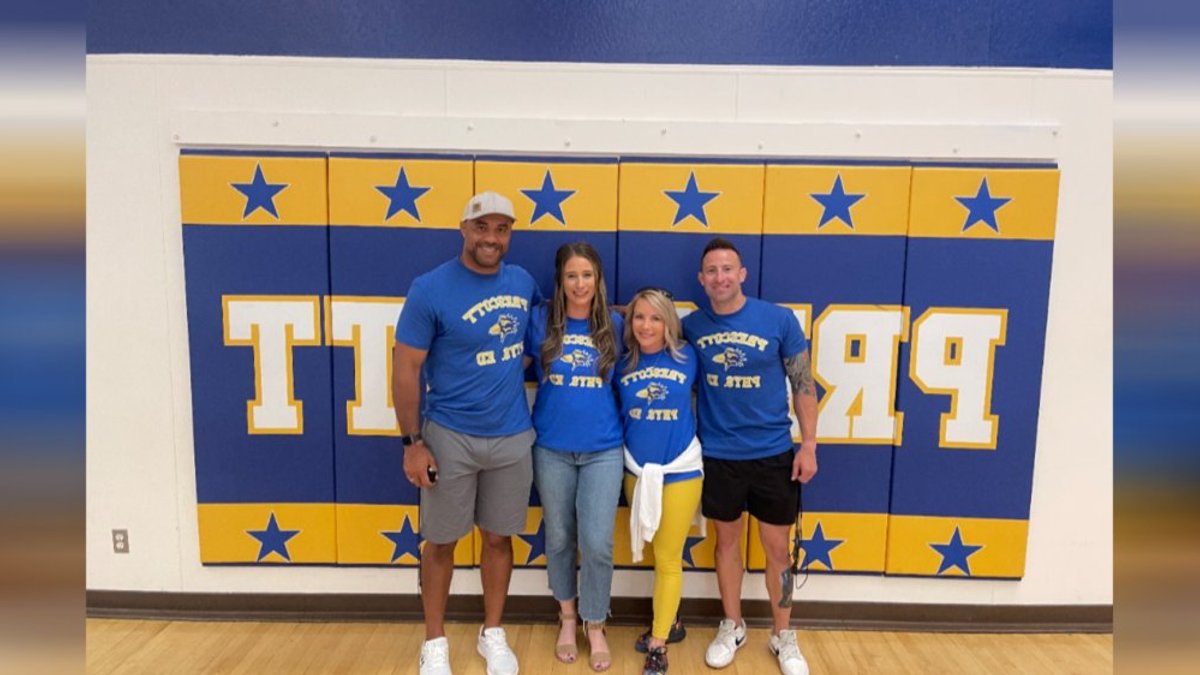
The Trump administration reinstated the Presidential Fitness Test on July 31, 2025, via an executive order that also launched the Presidential Fitness School Innovation Challenge. This competition invites schools and youth organizations to create repeatable models that encourage student participation in the test. Prescott Junior High School in Modesto, California, has built a reputation for a physical education program that may serve as a model for this initiative. The school’s focus on fitness has persisted for nearly fifty years, a legacy maintained by current teachers Jason Avelar and Garrett Beal.
A Standard of Excellence
Mark Wilson introduced the high-intensity curriculum to Prescott in 1973 after witnessing a demonstration of a fitness-based approach. Since then, students have used a color and points-based system to track their progress. Reaching 60 points earns red trunks, while achieving the same score again unlocks blue trunks. The system creates a tiered challenge where students must continually push their limits.
Avelar and Beal noted that the standards are high, but the results demonstrate their effectiveness. One student completed two miles in 12 minutes and 27 seconds, another performed over 6,000 continuous sit-ups, and several have managed more than 1,000 unbroken pushups. The program includes a physical education hall of fame, and Avelar confirmed that the staff must sometimes create custom levels for exceptional performance. Beal wears his Prescott shirt frequently, and he often encounters former students who recognize the school’s name on the hall of fame wall.
What happens in the gym at Prescott continues to shape the lives of those who walk through the doors. The rigorous structure forces students to confront their physical limits, and for many, that experience creates a lasting habit of self-discipline that survives after graduation. Even if a student takes the intensity for granted while attending, the realization often hits later in life when they compare their current routines to the standards they met years ago.
Read Also: Quality Time as a Couple at the Best Spa in Ubud
Avelar said that as students leave, they realize “Oh crap, this is a super special place.” He finds fulfillment in watching them reach goals and complete feats they never thought possible. Beal echoed this sentiment, calling the environment a special place to be. The teachers believe the reinstatement of the Presidential Fitness Test offers an opportunity for other programs to adopt similar high standards.
Learn more about the Presidential Fitness Test or the School Innovation Challenge on fitness.gov.
A Legacy of Fitness
Prescott’s physical education program has deep roots in the community, with a history spanning nearly five decades. The school’s approach is closely modeled after the La Sierra High School Physical Education Program, a renowned 1960s model from the President’s Council on Physical Fitness.
Mark Wilson, a former Prescott P.E. teacher, introduced the high-intensity curriculum in 1973 after witnessing its effectiveness. This military-inspired structure challenges students to prioritize fitness from a young age, supporting a culture of discipline and perseverance.
Read Also: Kona Ironman title swings on final-mile collapses
The program’s color and points-based system is a key motivator. Students begin with white trunks and zero points, progressing through 20 fitness tests that award one, two, or four points. Students must then restart at zero, aiming for blue trunks by reaching 60 points again at a higher difficulty level.
A Lasting Impact
The influence of Prescott’s P.E. program extends far beyond the school walls. Many students continue their fitness journeys after leaving Prescott, even if they don’t realize the program’s impact until later in life.
Personal Journeys Shaping Teaching Philosophies
Both Beal and Avelar’s paths to teaching were influenced by their early experiences with sports and mentorship. Beal, a former police officer, credited a high school wrestling coach for introducing him to weightlifting, which sparked his passion for fitness. Avelar, inspired by his football days and natural leadership as a linebacker, was encouraged by coaches and teachers to pursue a career in education. These formative experiences shaped their teaching philosophies, emphasizing discipline, leadership, and personal growth.


