
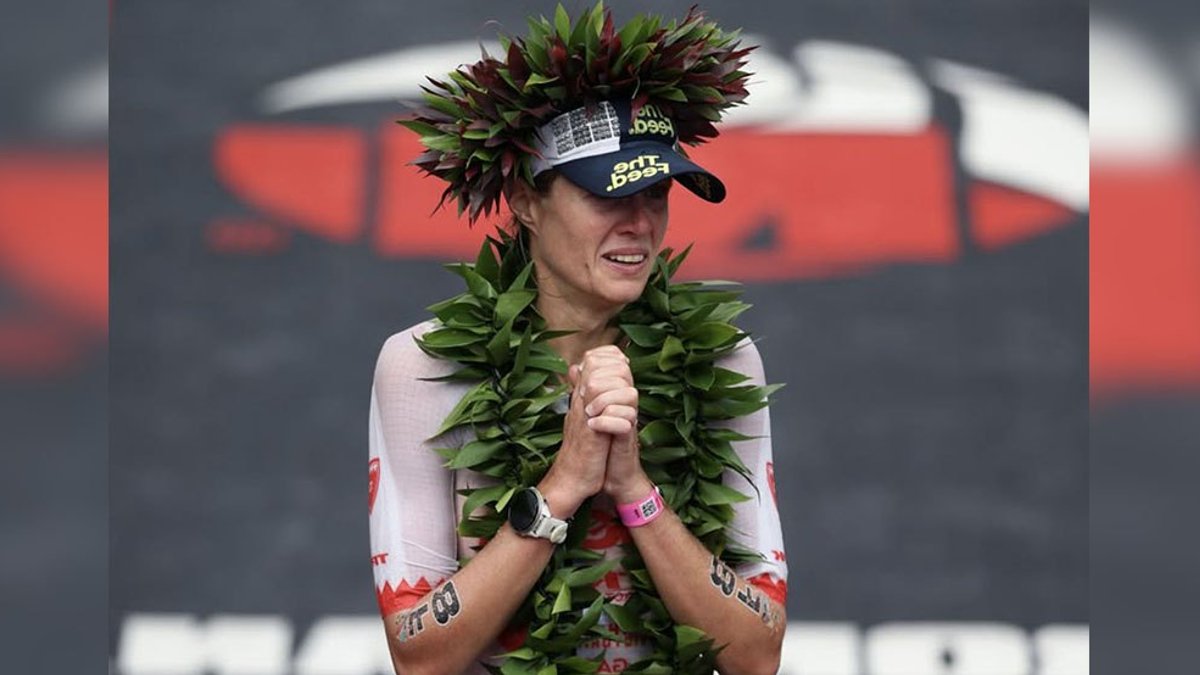
The final mile of an Ironman race is where strategies break down. Athletes who have already completed a 2.4-mile swim, a 112-mile bike ride, and a marathon run confront a harsh reality: their bodies may no longer function as intended. On October 10, this dynamic unfolded dramatically at the Ironman World Championship in Kona, Hawaii, when the women’s race produced a turn of events that defied expectations.
Taylor Knibb finished the race in 8:36:29, securing the championship after defending titleholder Solveig Løvseth experienced a collapse just before the finish line. Løvseth, who had led for much of the final stretch, stopped moving, dropped to the ground, and ultimately finished in eighth place. The podium was rounded out by Laura Philipp from Germany and Julie Derron from Switzerland.
The reversal gained further significance when considering the 2025 race, where the two athletes’ fates were inverted. In that event, Knibb had led the championship before collapsing during the marathon segment and failing to complete the race. Løvseth then took the lead and won the title. A year later, the athlete who had benefited from Knibb’s earlier breakdown became the one left unable to finish, while Knibb reclaimed her crown.
This narrative extends beyond sheer determination. Both competitors had already demonstrated their commitment to the sport. Knibb had claimed the Ironman 70.3 World Championship earlier in 2026, proving her ability to excel in a demanding endurance event. Løvseth was defending the sport’s most prestigious title. The decisive factor proved to be physical capacity rather than mental fortitude when the body’s energy reserves were depleted after eight and a half hours of racing.
Read Also: Anita Herbert’s Smith Machine Workout Targets Upper Body
Discussions about Løvseth’s collapse—whether caused by heat exposure, inadequate hydration, or improper fueling—are inevitable, but the event’s grueling nature makes an exact medical assessment impossible without further examination. What remains clear is that such breakdowns during extreme exertion are not merely performance failures; they can represent serious medical concerns. Reducing these moments to motivational phrases risks overlooking the genuine dangers inherent in high-level endurance sports.
The men’s race also delivered an unexpected outcome. Vincent Luis, a 37-year-old French triathlete competing in his first Ironman World Championship, emerged victorious with a time of 7:47:27. His triumph was not the result of obscurity; he had previously competed in the Olympics and won world titles in shorter-distance races. Yet in his debut at Kona, he overtook Magnus Ditlev of Denmark during the marathon segment and defeated former champion Gustav Iden by nearly a minute and a half. Matthew Marquardt from the U.S. secured third place.
For the first time since 2019, the men’s and women’s professional championships were held on the same Kona course. Both races demonstrated that physical superiority on paper does not guarantee success when exhaustion sets in. While training, nutrition, and equipment can be refined, no level of preparation can fully ensure a body will endure the full 140.6 miles.


