
Running a restaurant is not just about serving delicious food. Behind every popular menu item is a business operation that needs to balance ingredient costs, labour, rent, utilities, and other daily expenses. A restaurant can be crowded every evening and still struggle financially if its costs are not properly managed.
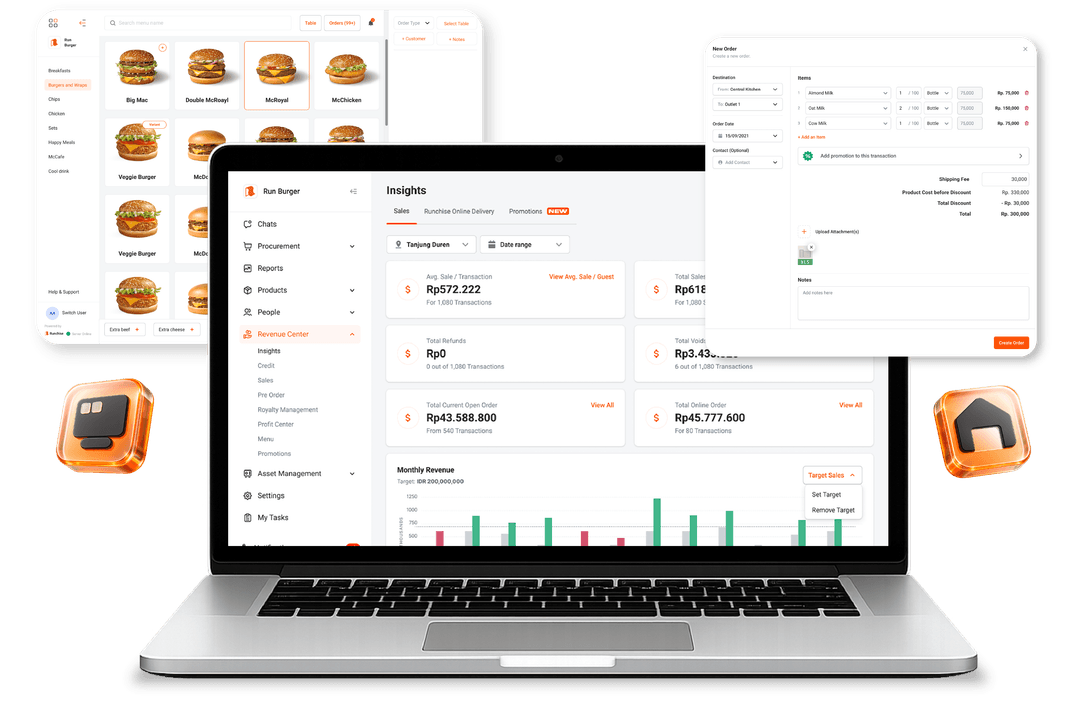
Food cost is one of the most important numbers restaurant owners should understand. It influences menu pricing, purchasing decisions, portion sizes, and overall profitability. As restaurant operations become more complex, having organised systems and reliable sales information becomes increasingly valuable. Digital platforms such as Runchise reflect how technology can help F&B businesses bring important operational information together, making it easier for owners to monitor performance and make informed decisions.
1. Understanding What Food Cost Really Means
Food cost refers to the amount a restaurant spends on ingredients used to prepare the food it sells. It is commonly expressed as a percentage of food sales.
The basic formula is:
Food Cost Percentage = (Cost of Ingredients / Food Sales) × 100%
For example, imagine a restaurant sells a bowl of chicken rice for $10. If the ingredients used to prepare that portion cost $3, the food cost percentage is 30%.
This figure gives owners a starting point for understanding how much revenue is being spent on ingredients. However, it should not be viewed in isolation. Labour, rent, utilities, packaging, delivery commissions, and other expenses also affect the restaurant’s overall financial performance.
There is no single ideal food cost percentage for every restaurant. A casual dining business, a bakery, and a premium restaurant may have very different cost structures. The important thing is to establish a realistic target based on the business model and review it regularly.
2. Why Food Costs Often Increase Without Owners Noticing
One of the biggest challenges in restaurant management is that food costs rarely increase because of one dramatic event. More often, small operational problems gradually affect the numbers.
For example, staff may use slightly larger portions than the standard recipe requires. Ingredients might expire because purchasing quantities are not aligned with customer demand. A supplier may increase prices, while menu prices remain unchanged.
Other common causes include:
- Inaccurate stock records.
- Excessive food preparation.
- Unrecorded ingredient waste.
- Inconsistent portion sizes.
- Unplanned purchasing.
- Theft or unexplained stock discrepancies.
- Changes in supplier pricing.
These issues may seem minor individually, but their combined impact can be significant over several weeks or months.
Restaurant owners should therefore look beyond total monthly spending. Comparing purchasing records, inventory movements, and sales data can help identify where costs are increasing and whether the changes are justified.
3. Standardising Recipes and Portion Sizes
A consistent recipe is one of the simplest ways to control food costs. Without clear preparation standards, two employees might prepare the same menu item using different quantities of ingredients.
Consider a restaurant selling beef burgers. If one kitchen employee uses 120 grams of beef while another uses 150 grams, the difference may not be obvious to customers. However, across hundreds of orders, the additional ingredient usage can become expensive.
Standardised recipes help prevent this problem. Each menu item should have a documented ingredient list, quantity, preparation method, and portion size.
Practical steps include:
- Recording the exact quantity of each ingredient.
- Using weighing scales and standard measuring tools.
- Providing clear preparation instructions.
- Training kitchen employees to follow the same procedures.
- Reviewing recipes whenever ingredient specifications change.
Consistency does not mean removing creativity from the kitchen. Chefs can still develop new dishes and improve presentation. The purpose is to make sure that every serving meets the restaurant’s quality expectations while keeping ingredient usage predictable.
4. Improving Inventory Management and Purchasing Decisions
Inventory management plays a major role in controlling food costs. Ordering too much creates the risk of spoilage, while ordering too little can interrupt service and disappoint customers.
The first step is understanding ingredient movement. Restaurant owners should know how much stock is available, how quickly it is being used, and when new supplies are needed.
A practical inventory routine might include:
- Checking high-value and perishable ingredients daily.
- Recording deliveries accurately.
- Applying the First In, First Out (FIFO) principle where appropriate.
- Monitoring expiry dates and storage conditions.
- Comparing actual stock with recorded inventory.
- Reviewing purchasing quantities based on sales patterns.
Supplier relationships are also important. Regular communication can help restaurants understand price changes, seasonal availability, minimum order quantities, and delivery schedules.
It is worth remembering that the cheapest ingredient is not always the most economical choice. Quality, consistency, shelf life, delivery reliability, and preparation yield should also be considered when evaluating suppliers.
5. Using Menu Engineering to Improve Profitability
Not every popular dish is necessarily profitable, and not every high-margin dish sells well. Menu engineering helps restaurant owners understand the relationship between customer demand and the profitability of individual menu items.
A simple approach is to compare two factors: how frequently a dish sells and how much contribution it generates after ingredient costs.
This creates four general categories:
- Stars: Popular dishes that also generate strong contribution margins.
- Plowhorses: Popular items that may have relatively lower margins.
- Puzzles: Profitable dishes that customers do not order frequently.
- Dogs: Items with both low popularity and low contribution.
These categories can guide menu decisions. A restaurant might highlight a profitable but overlooked dish through better menu descriptions or staff recommendations. It could also review the portion size or ingredient sourcing of a popular item with a low margin.
Menu engineering should not be based on cost alone. Customer preferences, brand identity, preparation complexity, and menu variety still matter. Removing a dish simply because it has a lower margin could affect the overall dining experience.
The goal is to create a menu that customers enjoy while supporting the financial health of the business.
6. Making Better Decisions with Restaurant Data and Technology
As a restaurant grows, managing operational information manually becomes increasingly difficult. Owners may need to compare sales across several outlets, monitor inventory, review menu performance, and understand changes in daily expenses.
A structured digital system can help centralise relevant information and reduce repetitive administrative work. Depending on its capabilities, restaurant management software may provide access to sales reports, stock records, purchasing information, and outlet performance data.
For a multi-outlet business, this can be particularly useful. Instead of collecting reports in different formats from every branch, management can work with more consistent information and identify unusual patterns more quickly.
However, technology is only useful when employees enter accurate data and follow clear procedures. A stock management system cannot provide reliable insights if deliveries, waste, and ingredient usage are not recorded properly.
Owners should also avoid becoming overwhelmed by too many reports. Start with a few important indicators, such as food cost percentage, inventory variance, waste levels, and sales by menu item. Review them consistently and use the results to guide practical improvements.
7. Building a Sustainable Food Cost Management Routine
Food cost management is not a one-time exercise. Ingredient prices change, customer preferences evolve, and restaurant operations become more complicated as businesses expand.
The most effective approach is to establish a routine that combines regular monitoring with continuous improvement.
A weekly review could include checking stock discrepancies, reviewing supplier prices, identifying frequently wasted ingredients, and comparing actual food costs with the restaurant’s target. Monthly reviews can provide a broader picture of profitability and highlight trends that may not be visible in daily reports.
It is also important to involve the entire team. Kitchen employees understand preparation and waste issues, purchasing staff know supplier challenges, and service employees often hear customer feedback first. Their observations can reveal practical opportunities to improve operations.
Restaurant owners should communicate financial targets in a way employees can understand. Rather than simply telling staff to reduce costs, explain why accurate portions, careful storage, and responsible ingredient handling matter.
Ultimately, successful food cost management is about creating better habits throughout the restaurant. Clear recipes, disciplined inventory control, thoughtful menu planning, and reliable operational information can help protect margins without sacrificing food quality.
A profitable restaurant is not necessarily the one that spends the least. It is the one that understands where its money goes, uses resources wisely, and consistently delivers value to customers. With the right processes and a willingness to review performance, F&B owners can build businesses that are both financially healthier and more sustainable over time.


