
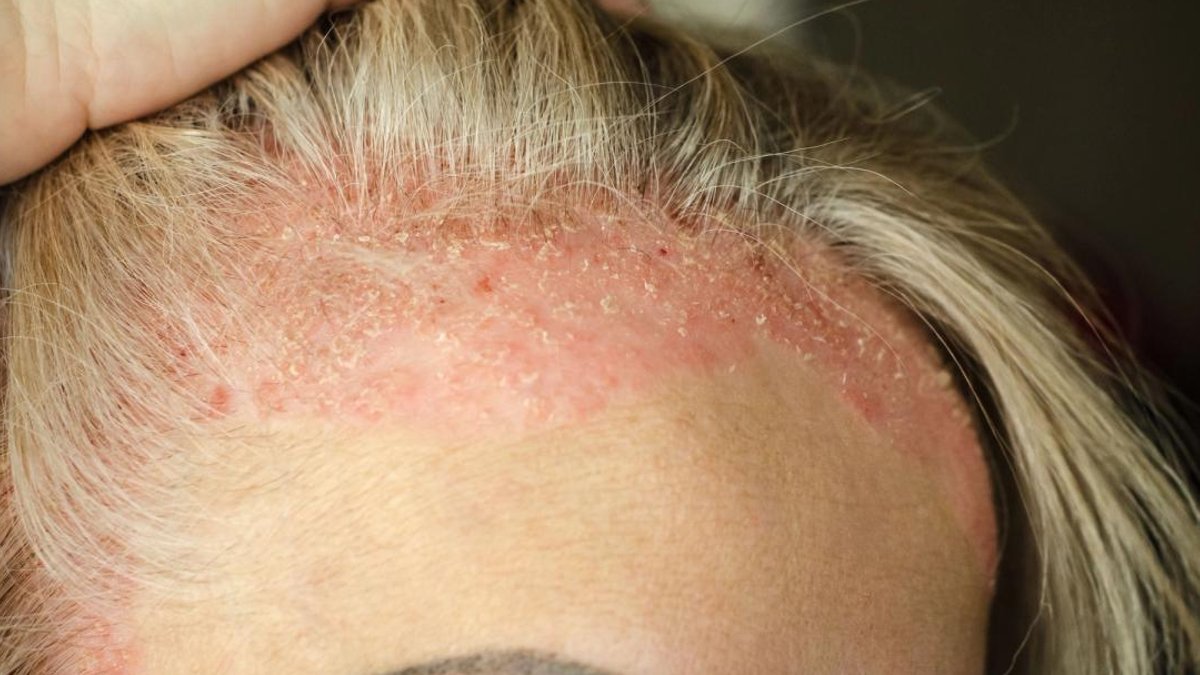
A recent systematic review and network meta-analysis determined that IL-17 inhibitors provide the most effective short-term treatment for scalp psoriasis clearance, with ixekizumab and brodalumab surpassing other biologics and small-molecule therapies in comparative effectiveness. The findings, published in the Journal of the European Academy of Dermatology and Venereology, synthesized data from 16 randomized trials involving 10,266 patients to assess efficacy, safety, and tolerability across available treatments.
Why Scalp Psoriasis Remains Difficult to Treat
Scalp involvement affects up to 80% of patients with psoriasis and is associated with pruritus, visible scaling, and a disproportionate psychosocial burden. Research presented at the 2025 American Academy of Dermatology Annual Meeting found that among 154 patients with moderate to severe scalp psoriasis, quality of life was substantially impaired across multiple patient-reported outcomes, even in those with less extensive disease elsewhere on the body, suggesting scalp involvement may affect patients out of proportion to total body surface area. Although several new biologics and oral agents have reached the market, comparative evidence specific to scalp disease has been limited, prompting the investigators to update earlier analyses with newer agents such as bimekizumab and deucravacitinib.
The review focused on clearance metrics, defined as a Scalp Physician’s Global Assessment (scPGA) or scalp-specific Investigator’s Global Assessment (ss-IGA) score of 0 or 1, or a 90% or 100% improvement in the Psoriasis Scalp Severity Index (PSSI) at weeks 12 to 16. Safety evaluations included all-grade adverse events and serious adverse events, and tolerability was measured by discontinuation due to adverse events.
Read Also: EEOC poised to tighten pregnancy workplace protections
Ixekizumab and Brodalumab Lead in Clearance Rates
All active therapies outperformed placebo, but ixekizumab administered every two weeks achieved the highest odds ratio for clearance (OR, 54.02), followed by brodalumab (OR, 53.16) and ixekizumab every four weeks (OR, 37.37). Guselkumab (OR, 32.75), an IL-23 inhibitor, ranked fourth; the authors noted guselkumab offered the most favorable balance of efficacy, safety, and tolerability. Bimekizumab (OR, 29.58) and secukinumab (OR, 21.09) also demonstrated strong results, although estimates for brodalumab and secukinumab were imprecise, each drawing on a single trial.
Adalimumab and ustekinumab showed moderate efficacy, while tildrakizumab, risankizumab, and deucravacitinib showed smaller but significant effects. Etanercept (OR, 3.64) and apremilast (OR, 3.56) ranked lowest in the comparison. The authors suggested the strength of IL-17 blockade may reflect the scalp’s immunology, as scalp lesions show higher IL-17A expression and CD8+ T-cell infiltration than lesions at other sites.
The analysis revealed that secukinumab (OR, 2.75), tildrakizumab (OR, 2.02), apremilast, both ixekizumab regimens, and deucravacitinib carried significantly higher rates of all-grade adverse events than placebo. No agent significantly increased the risk of serious adverse events.


