
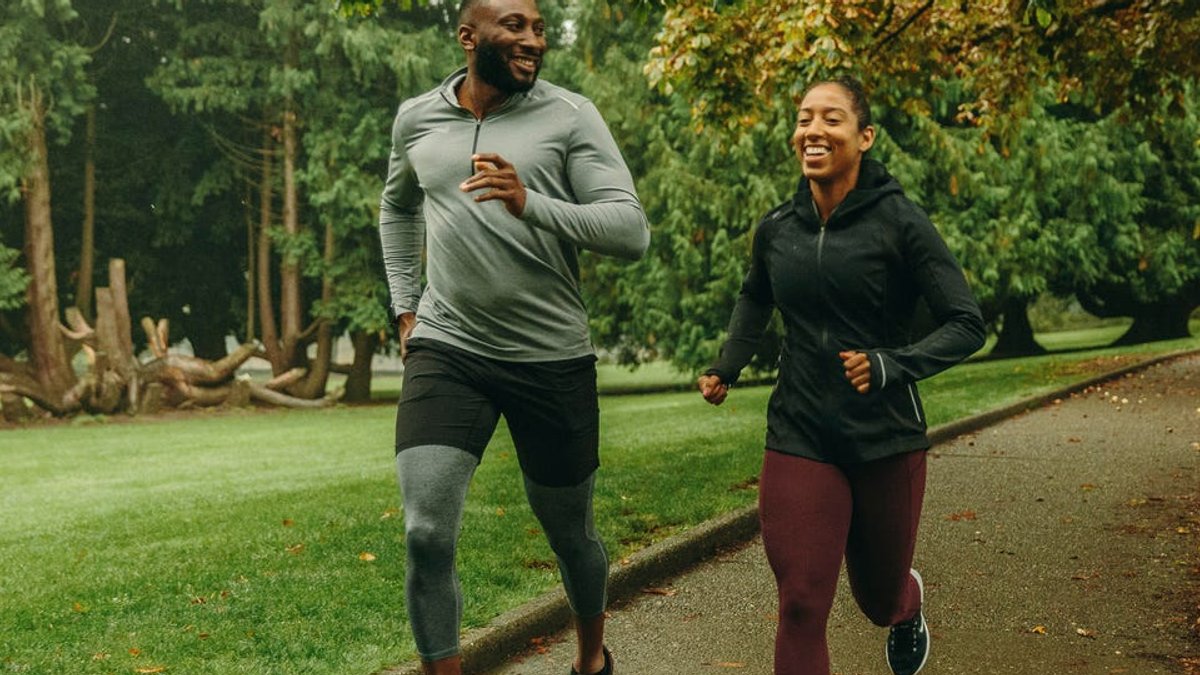
Women have stood at the top of podiums for decades, from the mile through the ultramarathon, with recent performances closing the gap in finish times with men.
Rachel Entrekin won the Cocodona 250 trail race, setting a new course record of 56 hours, 9 minutes, and 48 seconds, and becoming the first woman to win the race overall.
Jenn Lichter finished first for women at Western States, the first 100-miler of her career, breaking Courtney Dauwalter’s previous course record, and finishing in 15 hours, 28 minutes, and 5 seconds.
Related: Man Breaks Record After Massive Meal
Courtney Dauwalter has incredible performances of her own, including recently winning and setting the clockwise course record at Hardrock 100, finishing fifth overall in a time of 26 hours, 3 minutes, and 10 seconds.
A study published in Sports Medicine in 2023 backs up the narrowing space between men and women in long-distance running: Researchers examined a dataset of nearly 39,000 trail running races from 1989 to 2021 and found the performance gap between the sexes decreased as distance increased.
Recent research also offers some insight into why this gap may be closing. A study published in the Scandinavian Journal of Medicine & Science in Sports shows that highly trained women have an edge over men in distance running, thanks to a higher level of resilience and durability, meaning they can still perform well deep into a race.
The main principles of distance training apply to every runner, regardless of their sex. These principles include balancing long, slow distance runs with higher-intensity miles, steady increases in volume and intensity, incorporating strength workouts into your schedule to support running, and learning your fueling needs to maintain energy throughout training and on race day.
Related: Setting Boundaries with Your Mother
Emily Dow, PhD, RD, CSCS, assistant professor of practice, nutrition, and human performance at the University of Arizona, notes that the research is interesting because it sparks a conversation about women tolerating intensity.
Cliff Pittman, ultramarathon coach and director of Coaching at Carmichael Training Systems, notes that he looks at an athlete as an individual and prescribes training based on how they respond, not on presumptions of what their physiology is.
Ultimately, the research sparks interesting conversations, but training still boils down to individual needs.


