
Amber Bates has spent two years without health insurance, a situation forced upon her by unstable employment and income that falls outside the bounds of Medicaid eligibility but also exceeds the means for affordable private coverage. She resides in Georgia’s 14th Congressional District, a semirural area where nearly 14% of residents under 65 lacked insurance coverage in 2024—a rate exceeding the national average. The district’s conservative political leanings mirror its precarious healthcare access, where families like Bates’ struggle to afford basic needs.
Bates and her husband, who care for a 2-year-old son and her mother-in-law’s autistic child, allocate roughly one-third of their household income to prescription medications. Their primary care has devolved into emergency room visits, where they manage to avoid upfront costs. The financial strain is relentless, yet Bates remains a vocal supporter of Donald Trump, even while acknowledging his leadership’s shortcomings. “He’s trying,” she said. “It’s just a lot more other things have his attention.”
Greene’s Breaking Point Over ACA Subsidies
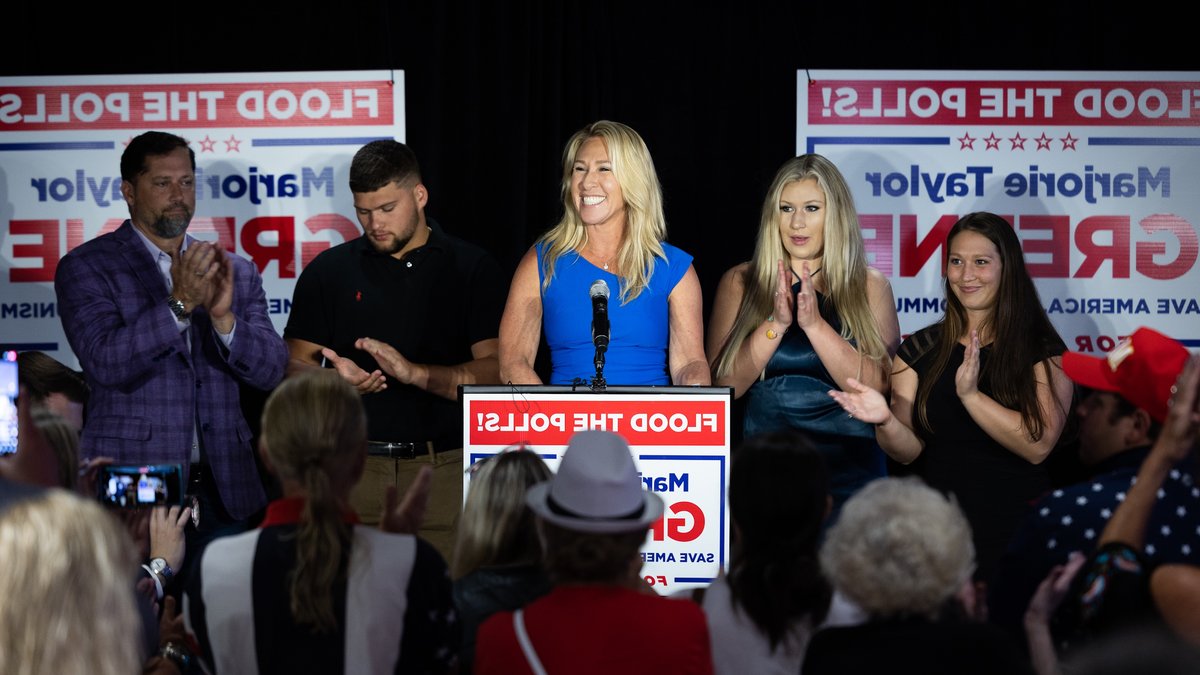
The district’s conservative identity has been shaped by figures such as Marjorie Taylor Greene, who represented it until her resignation in January 2026. Greene’s political trajectory was built on unwavering support for Trump, but last year she broke with him over the expiration of enhanced Affordable Care Act subsidies—a policy that had previously helped 74,000 people in her district secure coverage. She described the loss as “catastrophic,” noting that her adult children’s premiums would double without the aid. Trump subsequently withdrew his endorsement of Greene, prompting her resignation.
Greene’s shift highlighted a growing divide within the district. Nationally, 37% of Republican voters in a June poll ranked healthcare costs as “extremely important,” while 62% of ACA enrollees blamed Republicans or Trump for the subsidies’ expiration. Yet in Georgia’s 14th, where 16% of residents relied on Medicaid or CHIP in 2023, the political stance has remained unchanged. Charles Bullock, a political science professor at the University of Georgia, explained that voters in the district “cling to party loyalty. As long as Donald Trump and other Republicans are saying Obamacare is bad, they’re going to continue to buy into that idea,” he said, “even when it’s against their economic self-interest.”
Read Also: Native Hawaiians Face Medicaid Work Requirements
The GOP’s evolution from “repeal and replace” to rolling back coverage expansions has left a void for families like Bates’. Last summer’s One Big Beautiful Bill Act introduced stricter ACA enrollment rules, added fees, and required more rigorous documentation—changes projected by the Congressional Budget Office to leave 15 million more Americans uninsured over the next decade. With subsidies set to expire in 2025, enrollment fell by nearly 3 million this year.
GOP’s Half-Measures Leave Millions Uninsured
Greene’s frustration with the party’s inaction resonates with others. In December, House Speaker Mike Johnson introduced the Lower Health Care Premiums for All Americans Act as a GOP alternative to extending subsidies. However, the Congressional Budget Office estimated the proposal would increase the uninsured by 100,000 annually from 2027 to 2035. The House approved the measure in December, but the Senate has yet to act.
“If Republicans had a plan, this was the perfect scenario to get it passed,” Greene said. “You should have all the votes — get it done. And they’re not doing anything.”
Despite rising costs, voters in the district show no inclination to shift their allegiance. In April, Clay Fuller, a Trump-backed candidate, won the special election to replace Greene, though his victory margin was narrower than hers. He now faces Shawn Harris, a Democrat, in the November election. Fuller’s campaign argues that the expanded ACA subsidies, introduced under the Biden administration during the pandemic, were intended as a temporary solution, while Harris highlights how voters often conflate “Obamacare” with the ACA, a distinction Republicans have deliberately blurred.
Read Also: New health updates in latest KFF podcast
Voters Cling to Party Despite Rising Costs
Bates, for her part, expresses little optimism about policy changes. “I don’t believe anyone can make healthcare more affordable,” she said. “But I’d like to see Congress understand the reality of daily life for working families.”
The district’s uninsured rate shows broader challenges in Georgia’s 14th, where 14% of residents under 65 remained uninsured in 2024, a figure above the national average. The pressure is particularly acute for families relying on Medicaid or CHIP for their children. In 2023, 16% of district residents depended on these programs, but eligibility restrictions and funding cuts have narrowed access. Bates’ mother-in-law, for instance, lost her marketplace plan after the enhanced ACA subsidies expired, leaving her without coverage for the first time in years. The expiration of those subsidies, critical for 74,000 people in the district, forced many to choose between unaffordable plans or no coverage at all.
Greene’s public split with Trump over the subsidies exposed tensions within the GOP’s messaging. Though she had long opposed the ACA, her family’s direct financial strain, her adult children’s premiums doubling, pushed her to criticize Republicans for their inaction. “Across the country, people are outraged by the cost of health insurance,” she said in a June interview. Yet her resignation in January 2026 did little to alter the district’s conservative base. His campaign frames the expired subsidies as an unsustainable measure, while his opponent, Shawn Harris, argues that Republicans have misled voters by conflating the ACA with “Obamacare”, a distinction long obscured by GOP rhetoric.


