
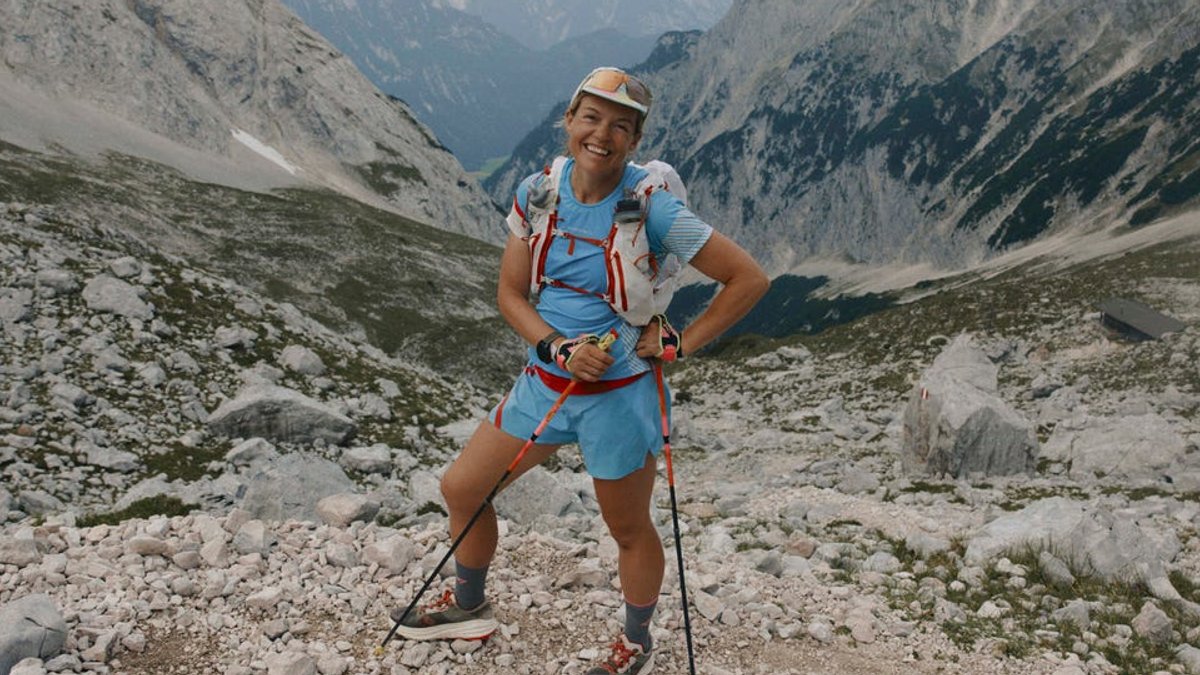
Sophie Woods, a 42-year-old New Zealand-born trail runner, has set a new record for the fastest known time across the Alps, completing the 1,242-mile Via Alpina route in under 30 days. This feat is not only an enormous and fast effort but also represents a redrawing of what’s possible.
Woods finished the route on August 1, beating the previous fastest known times of approximately 38 days for women and 35 days for men. She averaged about 40 miles of running and hiking with 8,200 to 13,000 feet of climbing every single day for a month.
The Via Alpina route is a connection of numerous trails across southern Europe with a cumulative vertical gain and loss of nearly 360,000 feet, the equivalent of summiting Mount Everest a dozen times from start to finish. Woods said she couldn’t think about the whole thing before starting, instead focusing on one day at a time.
She left Trieste, Italy, on July 4, and with a relentless mindset and little sleep, she pushed even harder than what she and her support team thought was possible. Woods crossed portions of eight countries—Italy, Slovenia, Austria, Germany, Liechtenstein, Switzerland, France, and Monaco—amid stormy weather, trails washed out by flash floods, wildfire smoke, and excessive heat.
Related: Experts Debate Happiness of Single Older Women
Canadian professional ultrarunner Marianne Hogan said Woods’s feat is absolutely insane and so inspiring. Hogan added that she loves seeing women take overall fastest known times, and it’s an awesome reminder of what’s possible. Woods’s feat comes at a time when other female ultrarunners have been rewriting records, including Colorado’s Rachel Entrekin becoming the outright winner of Arizona’s Cocodona 250 ultradistance trail race.
Woods’s feat didn’t come from nowhere; she has been open about her difficult fertility journey, including time spent going through IVF.
Stephanie Case, a Canadian trail runner and friend of Woods, said the new Via Alpina fastest known time endeavor has been part of Woods’s journey to show other women that they can go do big, scary things, no matter what stage of their life they are at. Case added that Woods is incredibly selfless, loyal, and humble, and her willingness to be candid about how hard it was—physically and emotionally—is a big part of why the attempt caught fire well beyond the usual ultrarunning circles.
As women, Case said, they need to push themselves to do things they aren’t sure they will finish, things at which they think they might fail. Because, she said, they are way stronger than they’ve been led to believe, and there is really only one way to find that out for themselves. Woods began her quest with little fanfare, but it gained international attention after Case posted about it on social media.
Related: Paralympian swims Manhattan bikes America runs 300 miles
Woods’s attempt shows the power of support and community in achieving big goals. Her husband crewed her the entire way, and friend and professional photographer Zoe Salt covered a lot of ground alongside her, documenting the effort on camera. Her dog, Nila, also came along in the support van.
Now, Woods has over 50,000 followers, and her story has inspired many women to take on big challenges. The ultrarunning community has welcomed her with open arms, and she has become a role model for many female runners, including those who use heart rate monitoring to track their progress.
The Via Alpina route is known for taking backpackers three to five months to complete. However, it has only been raced against the clock twice before, with British ultrarunner Jake Catterall setting the men’s mark and previous overall fastest known time in August 2024.


