
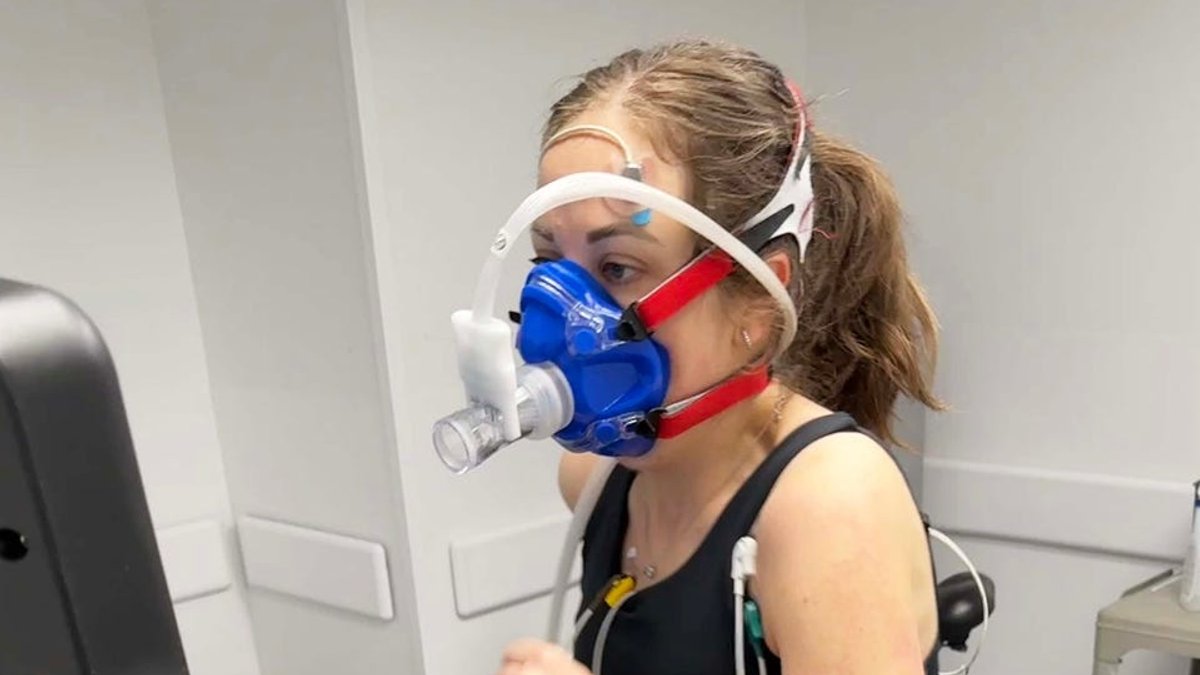
I recently took a VO2 max test to determine my individual heart rate zones, as I had been struggling to stay in zone 2 on my easy runs.
The test involved running on a treadmill with electrodes attached to my body and a mask to measure my oxygen intake, starting at a slow pace of 4.4 miles per hour.
As the grade increased to 16.3, I found it difficult to continue, with my heart rate reaching 188, and I decided to stop the test.
Understanding Heart Rate Zones
Heart rate zones are individual and cannot be determined by general formulas, according to Tamanna Singh, MD, director of the Sports Cardiology Center at Cleveland Clinic.
Singh explained that heart rate zones should be used only as an approximation, and it’s not necessary to drive oneself crazy trying to fit within them.
Runners can use their rate of perceived exertion to evaluate how a run feels, but for those who need hard numbers, a VO2 max test can provide precise results, measuring the amount of oxygen a person can use during intense exercise.
This test can help determine individual heart rate zones, which is important for effective training, as noted by the report.
My VO2 Max Test Results
My test results showed that my actual heart rate zones differ significantly from the generic zones, with my zone 2 below 79% of my max heart rate, which is 149 bpm.
Related: New Weight Loss Pills Face Off
They also showed that my zone 3 is between 79%-88% of my max heart rate, which is 150-165 bpm, demonstrating how much the true numbers can differ from the default ones.
These results are individual to me, but they demonstrate the importance of precise measurements for runners, as journalists on the scene have noted.
Adjusting My Heart Rate Zones
I updated my Garmin and Strava settings with my new heart rate zones, and I found that my runs became more comfortable, with my easy runs, in particular, becoming easier to achieve.
My watch measurements aligned with my perceived exertion, making my training more effective, and I can now tailor my training to my specific needs and avoid pushing myself too hard by using my nutrition plans more effectively.
Understanding my individual heart rate zones has made a significant difference in my running.
With this newfound knowledge, I can continue to improve my running performance and reduce my risk of injury, as Tamanna Singh noted, it’s always better to have a precise measurement than to rely on general formulas, according to the filing.
I can now focus on my training with confidence.


