
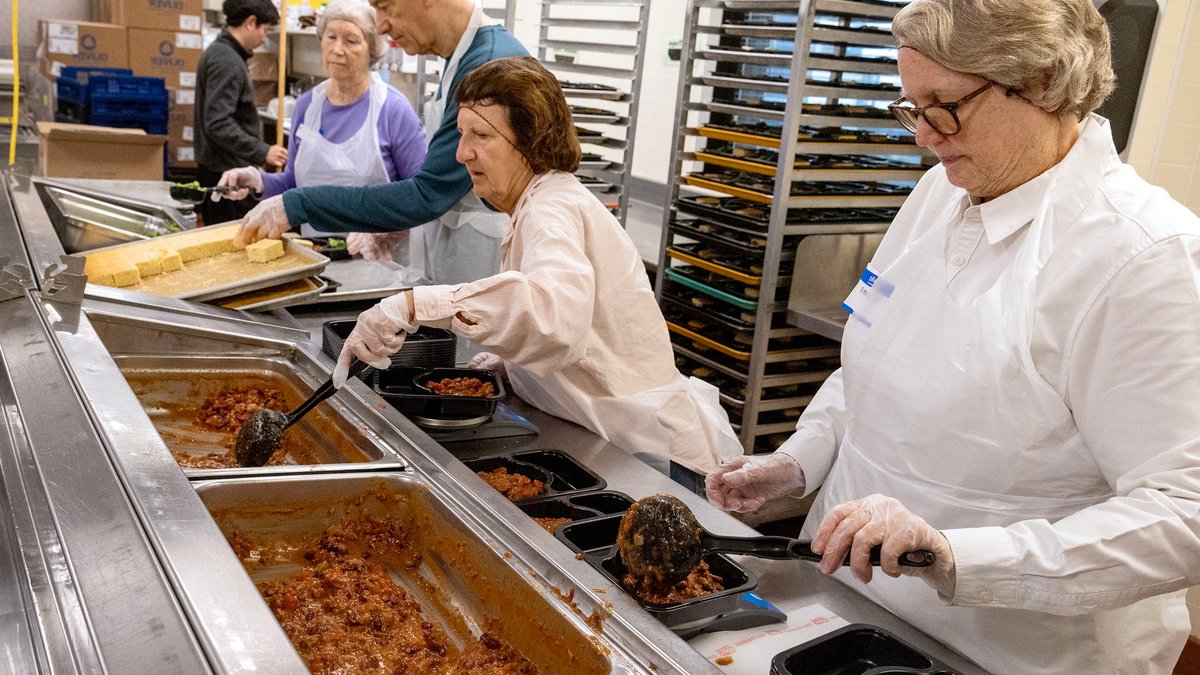
A kitchen in a quiet Boston neighborhood buzzes with activity on a weekday morning. Volunteers prepare chicken, stuff bell peppers, and pack trays for a program that delivers medically tailored meals to Medicaid patients who struggle to shop or cook. This initiative reflects a broader push to treat food as a medical intervention, and research confirms its effectiveness.
Vanessa Georges, now in remission from throat cancer, credits the meals with restoring her energy. Without them, she said, she would not have eaten enough to recover. “These meals have given me a second chance,” she said. Beyond physical recovery, she has spent less time in doctors’ offices—a pattern supported by clinical data.
A study in Nature Medicine followed 1,900 Massachusetts residents who received medically tailored meals for at least three months. Compared to similar patients who did not, they experienced 20% fewer emergency room visits and 31% fewer hospitalizations. Dariush Mozaffarian, the Tufts University cardiologist who led the research, said the results were transformative. “That’s a really big deal, because most things in healthcare don’t [reduce costs].”
The financial benefits extend beyond individual patients. For those with heart disease, the meals lowered healthcare expenses by about $10,000 per person over six months. For kidney disease patients, the reduction reached $12,000. The program costs $125 per person weekly, but long-term savings often surpass that. Nationally, researchers project medically tailored meals could prevent 1.6 million hospitalizations and save the U.S. $13.6 billion annually—addressing poor nutrition, the leading cause of preventable healthcare spending.
States grapple with Medicaid funding cuts
The federal government has long acknowledged food’s role in health. Since 2016, 13 states have secured Medicaid waivers to fund meal deliveries under the “food is medicine” model. Three additional programs await approval. However, financial pressures are growing. The 2025 One Big Beautiful Bill Act cut Medicaid funding by over $900 billion, forcing states to choose between reductions or new taxes. Some Republicans, including Sen. John Kennedy, have accused states of misusing Medicaid funds—though these fraud claims target housing and nutrition programs, not the clinical evidence supporting them.
Amaya Diana, a policy analyst at KFF, warns states now face difficult choices. “If states are not able to offset the loss of federal funds with new taxes or reductions in other state spending, they may have to make program cuts,” she said. The uncertainty runs deeper than budget constraints. The Trump administration’s stance on Medicaid has shifted: earlier support for social services has given way to skepticism. Guidance allowing states to address social determinants, including food, was rescinded, and officials now prioritize budget impacts over health outcomes.
Related Post: Clinical trial boosts Perelel protein for women’s health
Kurt Hager, a University of Massachusetts researcher who co-led the Massachusetts study, said states will now evaluate programs individually rather than under uniform rules. “Administration officials have warned that they will be more focused on the budget impacts of such initiatives.” Meanwhile, top health officials, including Robert F. Kennedy Jr. at HHS and Mehmet Oz at CMS, have promoted nutrition as a patient outcome, though their focus has remained on hospital menus rather than broader Medicaid initiatives.
Federal policy shifts stall progress
The lack of clear policy has left states uncertain. Katie Garfield, a Harvard Law School researcher studying social determinants of health, said the absence of federal direction creates instability. “We need to see that step forward to resolve some of the uncertainty.” Even with evidence, progress remains stalled. Rep. Jim McGovern, a Massachusetts Democrat who sponsored a Medicare meal pilot for chronically ill seniors, said his bill has not advanced. “Lawmakers have had a hard time engaging administration officials on medically tailored meals,” he said.
Not all programs face equal scrutiny. Community Servings in Boston tailors meals to individual health needs, adjusting sugar, salt, fat, and fiber based on diagnoses, medications, and cultural preferences. David Waters, the nonprofit’s CEO, said the organization works with healthcare providers to match dietary needs. “What we’re able to do is to work with your healthcare provider to understand your health realities, what your diagnoses are, what your medications are, side effects, food allergies, cultural norms, and then prescribe a diet for you that is scratch-made,” he said.
Personalized meals transform patient outcomes
The delivery system relies on freshly prepared dishes that are either chilled or flash-frozen, allowing recipients to heat meals in minutes. This approach ensures nutritional requirements, such as reduced sodium, adjusted sugar levels, and tailored vitamins, are met without demanding cooking skills. Local nonprofit kitchens continue to customize menus based on each patient’s medical profile, medication regimen, and cultural background. By coordinating with healthcare providers, they develop individualized diet plans aligned with treatment goals.
Medicaid Billing Concerns and One Patient’s Meal Experience
Steve Honyotski, 71, has diabetes, obesity and high blood pressure and says his health improved since the meals began. He uses less insulin and has lost enough weight to delay a knee-replacement surgery.


