
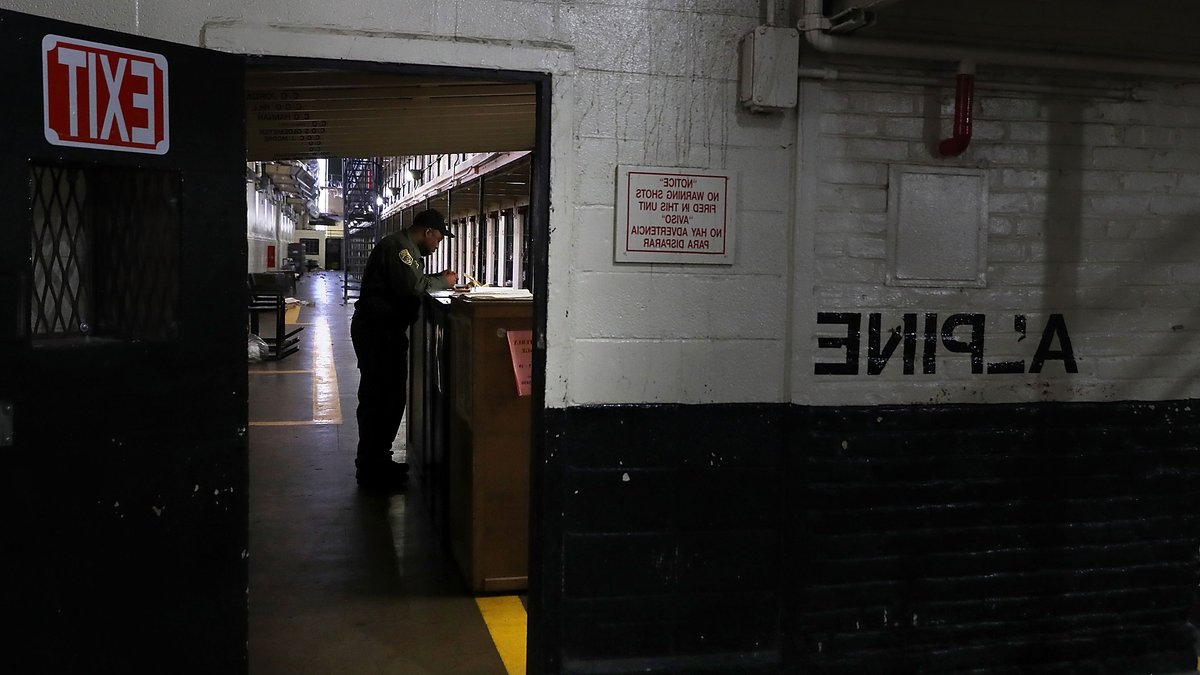
California’s indoor heat protections for workers exclude the tens of thousands of incarcerated people and staff who labor in the state’s aging, largely uncooled prisons—a gap that safety advocates call a dangerous oversight as extreme heat becomes deadlier.
The state adopted landmark indoor heat rules in 2024 for over 1 million workers in warehouses, factories, and kitchens, but prisons and local detention centers were exempted. Governor Gavin Newsom’s administration claimed the rules could cost the state $6 billion upfront, though officials have since refused to disclose detailed cost breakdowns. Two years later, the administration proposed weaker indoor heat standards for correctional facilities. Under the draft rules released in May, protections would not trigger until temperatures hit 87 degrees—5 degrees higher than the threshold for other indoor workplaces. The rules also ignore humidity, radiant heat, and the heat index, which can make conditions feel far hotter than the thermometer suggests.
Proposed Rules Lag Behind 2024 Standards
Stephen Knight, co-executive director of Worksafe, a California nonprofit focused on workplace safety, called the proposed standards “a second-class standard.” He noted that the human body does not handle heat differently in a prison than in an Amazon warehouse. Extreme heat is the leading weather-related killer in the U.S., with deaths and illnesses surging during heat waves. Prolonged exposure without cooling can trigger heat exhaustion or stroke, even among healthy individuals. For incarcerated workers, who often earn less than 50 cents an hour, the risks are compounded by limited control over their environment.
California’s prisons, many built over 50 years ago in some of the state’s hottest regions, rely on fans and swamp coolers. Fewer than one in four of the system’s 791 housing units have any mechanical cooling, according to a January report from the California Department of Corrections and Rehabilitation. Uninsulated concrete walls make it nearly impossible to keep temperatures below 89 degrees, even in facilities with air conditioning.
Read Also: Court Ruling May Expand Skimpy Health Plans
Aging Prisons Lack Adequate Cooling
In 2024, indoor temperatures in at least one prison reached 90 degrees or higher on 86 days and 95 degrees or more on 46 days. The proposed prison heat rules would allow temperatures to climb higher before requiring protections like cooldown areas or additional breaks. Unlike the 2024 standards for other workers, which mandate cooling when indoor temperatures or the heat index reach 87 degrees, prison guards and staff would only get relief at that threshold, and even then, without accounting for humidity or radiant heat.
Janice O’Malley of the American Federation of State, County & Municipal Employees warned that temperature alone does not measure how dangerous these conditions are. In these facilities, poor ventilation and protective clothing make it far harder to cool down. Officials with the California Department of Corrections and Rehabilitation have cited staffing challenges as a major hurdle, noting that guards would need additional personnel to cover cooldown breaks. Juvenile detention centers warn that portable cooling units pose security risks. The state’s cost estimates for cooling prisons have fluctuated wildly, from $900,000 in early assessments to billions in later revisions, though details remain classified.
Cost Estimates and Staffing Hurdles
Newsom, who has positioned himself as a climate leader, released an extreme-heat action plan in August that highlighted the 2024 indoor worker protections while acknowledging prison rules were still under development. But advocates say the delay leaves a vulnerable population exposed as heat waves grow more intense. California’s average annual temperature is now 2.5 degrees warmer than in 1895, with nine of the ten hottest years on record occurring since 2014. Scientists project 2026 could be the hottest yet. Meanwhile, the state’s prisons, many located in the Central Valley and Southern California’s inland areas, face a losing battle against the heat.
The proposed prison heat rules omit key safeguards included in the 2024 standards for other indoor workplaces. While warehouses, factories, and kitchens must provide cooldown areas and additional breaks when indoor temperatures or the heat index reach 82 degrees, prison staff would only receive those protections at 87 degrees. The rules also ignore radiant heat, common in prisons where uninsulated concrete walls absorb and radiate heat, and humidity, which can make conditions feel 10 to 15 degrees hotter than the thermometer indicates. Health experts warn that these omissions create a dangerous gap, particularly in facilities where workers often perform physically demanding tasks while wearing protective gear like body armor or uniforms that trap heat.
Read Also: Georgia’s uninsured struggle persists despite conservative politics
Security and Practical Barriers to Cooling
Security concerns further complicate efforts to improve cooling in prisons. The Chief Probation Officers of California have raised alarms about portable air conditioning units, citing risks of tampering or misuse by incarcerated individuals. Juvenile detention centers, which house younger inmates, face additional challenges: some facilities lack the infrastructure to install permanent cooling systems, and even temporary solutions like fans or misting stations require constant supervision.
In a June 2025 memo, the California Department of Corrections and Rehabilitation acknowledged that many of its aging facilities, some over 50 years old, were not designed with heat mitigation in mind. “Comfort level of the incarcerated population and staff was not a consideration or a priority” during their construction, the document stated, leaving workers and inmates vulnerable as temperatures rise.
The financial burden of retrofitting prisons with cooling systems has fluctuated wildly since 2023, when initial cost estimates hovered around $900,000 for the first year and under $500,000 annually afterward. By mid-2025, however, the state Department of Finance revised the figure upward to billions of dollars, citing updated assessments from the corrections department.
Despite repeated requests under the California Public Records Act, neither the Department of Finance nor the California Department of Corrections and Rehabilitation has disclosed the methodology behind these revised estimates. Advocates like Laura Stock, a former Occupational Safety & Health Standards Board member whom Newsom removed after she criticized the administration’s delays, argue that the lack of transparency is itself a form of neglect. “You’re leaving a very important population uncovered,” Stock said. “That’s very unjust. There’s no argument for that.”


